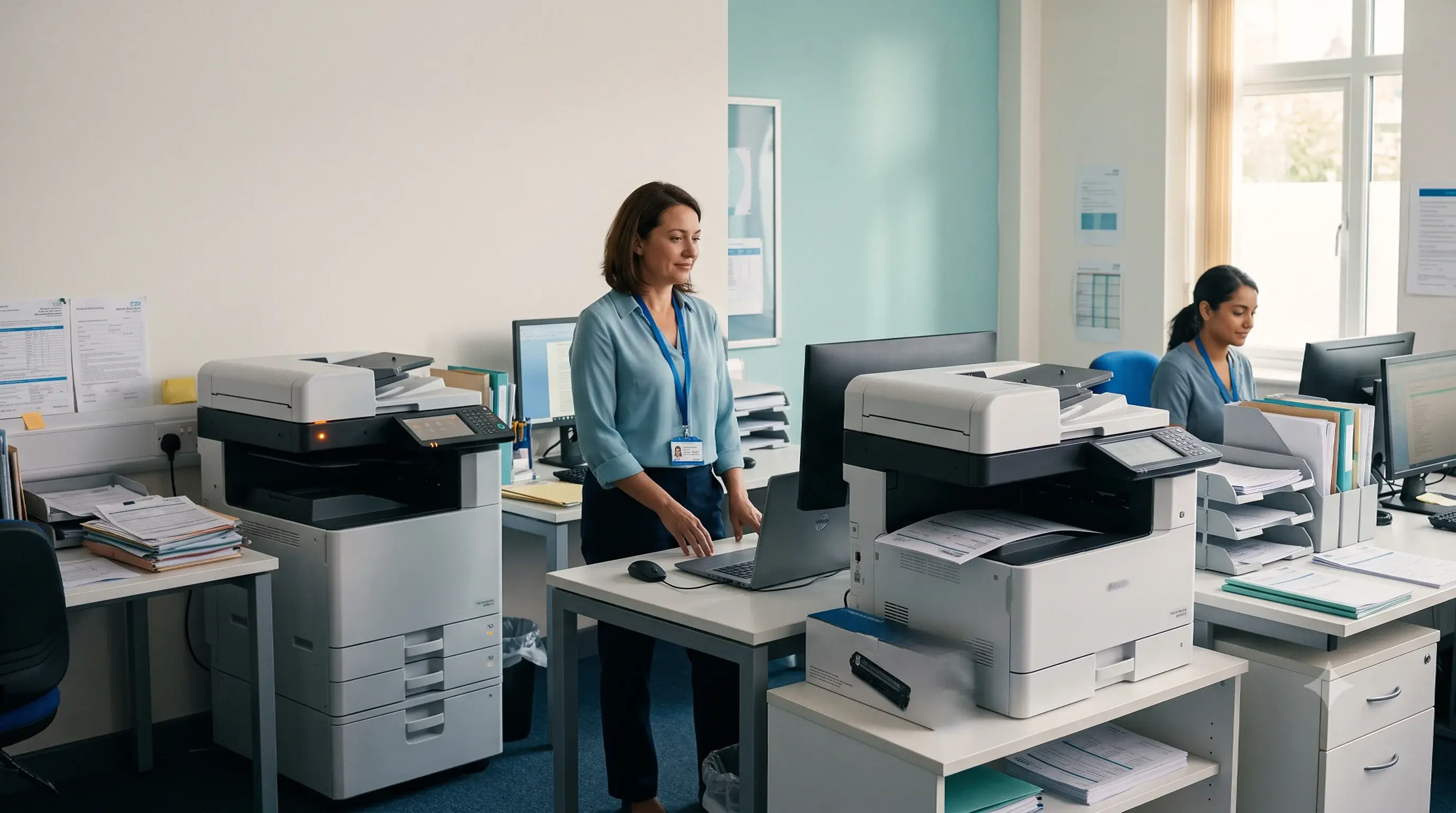
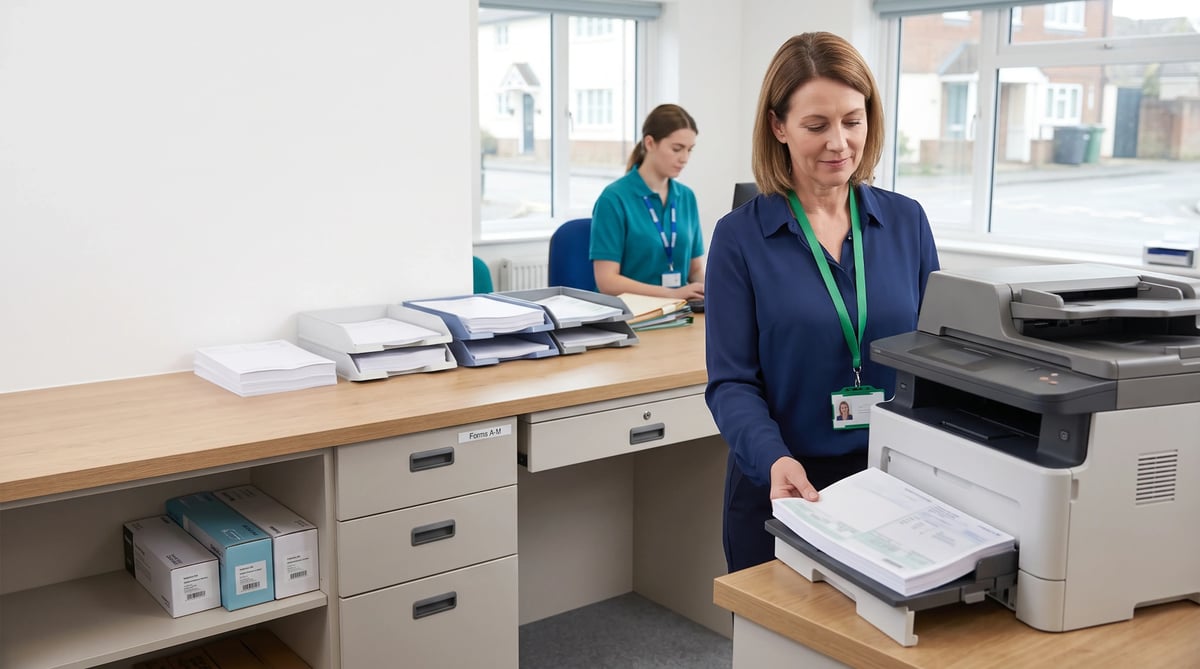
For a busy GP surgery, unreliable printing was more than an inconvenience. Broken printers, slow response times and manual toner ordering were creating avoidable pressure for staff who already had to keep multiple systems and daily patient demand moving.
ARC helped the practice replace that frustration with a more proactive, responsive model - one where toner arrives before it runs out, support fits around the surgery, and issues are owned without the practice team having to keep chasing.
The challenge
When Darren Nickerson became Practice Business Manager after the second COVID lockdown, he quickly saw how much pressure small operational failures could place on a GP surgery. Staff relied on multiple systems every day, and when something did not work smoothly, the impact landed quickly on both the team and patient-facing work.
Printing had become a repeated source of frustration. Under the previous NHS IT support model, a printer fault could take two to three weeks to resolve. The practice was also using non-standard cartridges, while toner ordering depended on someone remembering to order, chase and check delivery.
In primary care, print still supports essential workflows - from blood forms to letters, referrals and patient correspondence. When a consultation-room printer failed, clinicians had to find workarounds. Less IT-confident staff could be put under extra pressure, and the practice team had to spend time supervising visits, repeating issues to different helpdesk contacts and chasing progress.
For Darren, the challenge was not just the printer. It was the lack of ownership around the whole process.
What ARC did
ARC reviewed the surgery’s print setup and proposed a more standardised, manageable approach. The team looked at the multifunction device, toner supply and supplier management, then worked around the surgery’s availability to install the new setup without unnecessary disruption.
- Assessed the surgery’s existing printer environment
- Standardised the print setup to make support easier
- Introduced automatic toner ordering
- Helped manage third-party supplier follow-up
- Provided responsive helpdesk and on-site support
“You can pick up the phone, it goes through to the help desk, they will explain what they're going to do and then it happens straight away. The longest time I've waited for an email response is about half an hour. It's really, really good customer service.”
Darren Nickerson - Practice Business Manager, Southbourne Surgery
“When they came to do the initial introduction, they were clearly very knowledgeable about primary care, GP services and the issues that we could face as a result of a printer failing or a toner cartridge not being available. That was the deciding factor.”
“They do the chasing. That’s the kind of service that we want really - something that you can effectively hand off to them and let them do the work and you get the benefits.”
The outcome
The surgery now has a print support model that feels calmer and more reliable. Toner arrives before it runs out. Helpdesk support is quick and clear. On-site support is familiar and consistent. When another supplier needs chasing, ARC can take that pressure off the practice team.
- Less time spent remembering, ordering and chasing toner
- Faster response when support is needed
- Fewer disruptions caused by unresolved printer faults
- Better continuity through a named on-site technician
- More confidence that support will fit around the surgery’s working day
For Darren, the difference is that ARC is proactive rather than reactive. Instead of the practice having to manage every moving part, ARC takes ownership and works around the realities of primary care. That means staff can spend less time firefighting operational issues and more time focused on the day-to-day running of the surgery.
Why ARC was the right fit
ARC understood that print issues in a GP surgery are not minor admin problems. They affect staff time, clinical workflows and the smooth running of patient-facing services.